


Industry Event
Vision Tech Event-Based Session: Biology-Inspired Sensors for Space - Why a Biological Approach Makes Sense
21 January 2026 • 2:00 PM - 2:30 PM PST | West Expo Stage 1 (Moscone West, Exhibit Level)
Neuromorphic Sensors offer a very different way of performing imaging tasks, promising low-power and high-speed sensing tasks. In this talk, I will showcase how neuromorphic sensing can be used to solve real-world problems in space imaging, both from the ground and in orbit. Showcasing results from our ground-based network of neuromorphic sensors for tracking satellites and space-junk, to two successful neuromorphic sensors on the International Space Station, this talk will highlight how space is a perfect application of this technology, and further, explain why a biological approach makes sense for space.
Gregory Cohen is a Professor of Neuromorphic Systems and Director of the International Centre for Neuromorphic Systems (ICNS) at Western Sydney University. He is a pioneer in event-based and biologically inspired sensing, with a research portfolio spanning space imaging, satellite and debris tracking, orbit determination, and autonomous navigation. His work integrates neuromorphic engineering, machine learning, and real-world signal processing, supported by both hardware and software innovation.
Gregory has led projects ranging from neuromorphic approaches to space situational awareness to medical sensing applications, such as multimodal systems for infant health monitoring. Prior to academia, he worked in engineering and consulting roles across electronics and start-up ventures, giving him a versatile foundation that bridges applied research and practical deployment.
MENU: Coffee, decaf, tea, and water will be available nearby.
SETUP: Theater seating.
Speaker
 |
|
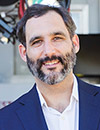
Gregory Cohen is a Professor of Neuromorphic Systems and Director of the International Centre for Neuromorphic Systems (ICNS) at Western Sydney University. He is a pioneer in event-based and biologically inspired sensing, with a research portfolio spanning space imaging, satellite and debris tracking, orbit determination, and autonomous navigation. His work integrates neuromorphic engineering, machine learning, and real-world signal processing, supported by both hardware and software innovation.
Gregory has led projects ranging from neuromorphic approaches to space situational awareness to medical sensing applications, such as multimodal systems for infant health monitoring. Prior to academia, he worked in engineering and consulting roles across electronics and start-up ventures, giving him a versatile foundation that bridges applied research and practical deployment.
Event Details
FORMAT: Oral presentation followed by audience Q&A.MENU: Coffee, decaf, tea, and water will be available nearby.
SETUP: Theater seating.