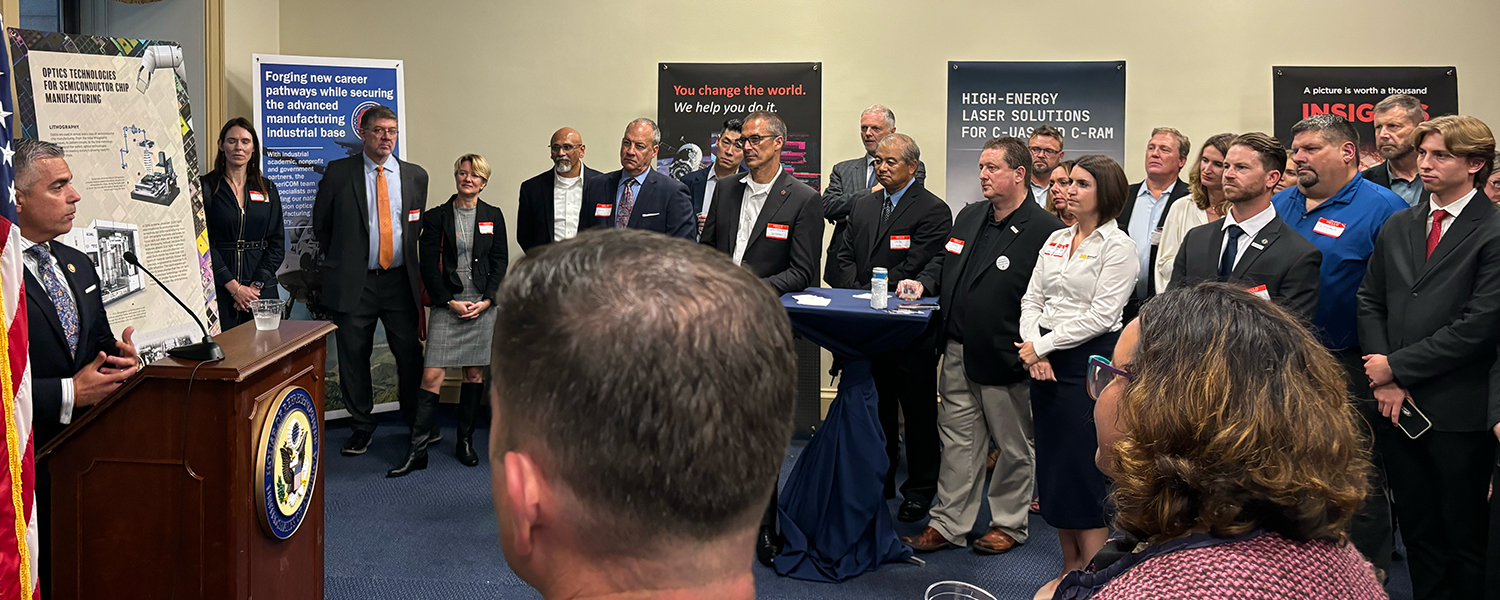
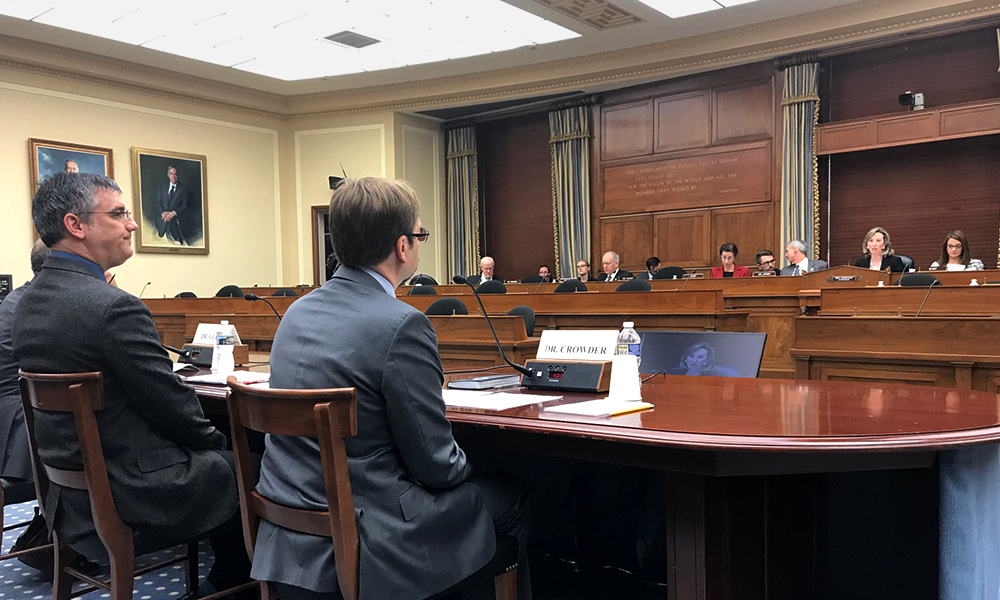
SPIE guides and influences decisions and attitudes within political, economic, professional, and educational institutions, in support of its Members as well as the optics and photonics industries and community.
Science funding is under attack in the United States. Elected officials need to hear from their constituents on why federal funding of science is vital.
Community action is needed now and SPIE has made it easy for you to contact your representatives.
FYI science policy this week: May 11
Schumer calls on DHS to help defend against AI-enabled cyber threats… On May 7, Senate Minority Leader Chuck Schumer (D-NY) sent a letter to Secretary of Homeland Security Markwayne Mullin calling on the Department of Homeland Security (DHS) to coordinate with state, local, tribal, and territorial (SLTT) governments to ensure their digital systems, such as those in hospitals; energy grids; water infrastructure; school, election, and telecommunications systems; and other critical infrastructure, are not vulnerable to AI-enabled hacking. Sen. Schumer’s push follows Anthropic’s announcement of Claude Mythos, prompting concerns that while advanced AI will help bolster cyber defenses, criminal and state-backed hacking groups will also exploit this new technology to conduct AI-enabled hacking. (read more here)
CAISI announces agreements with leading AI companies… On May 5, the Center for AI Standards and Innovation (CAISI) at the Department of Commerce’s National Institute of Standards and Technology (NIST) announced new agreements with Google DeepMind, Microsoft and xAI to conduct pre-deployment evaluations and targeted research to better assess frontier AI capabilities and advance the state of AI security. These agreements will support information sharing, driving voluntary product improvements and ensuring a clear understanding in government of AI capabilities and the state of international AI competition. The agreements closely resemble voluntary vetting deals made in August 2024 between the Biden Administration and OpenAI and Anthropic — arrangements CAISI said have since been "renegotiated" to reflect Trump Administration priorities. (read more here)
FYI science policy this week: May 4
Trump Administration announces agreement with AI companies to expand classified work… On May 1, the Pentagon announced it entered into agreements with eight frontier AI companies – SpaceX, OpenAI, Google, NVIDIA, Reflection, Microsoft, Amazon Web Services, and Oracle – to deploy their advanced AI capabilities on the Department’s classified networks for lawful operational use. These agreements aim to accelerate the transformation toward establishing the U.S. military as an AI-first fighting force. The companies agreed to allow the Pentagon to employ their technology for “any lawful use” – a standard resisted by Anthropic that ultimately led to the dispute over the company’s contract with the federal government and designation as a “supply chain risk.” (read more here)
Senators raise concerns over Chinese espionage targeting American AI… On April 30, Sens. Jim Banks (R-IN) and Chuck Grassley (R-IA) sent a letter to nine AI companies citing growing concerns China is actively targeting the U.S. AI sector through espionage and other security threats. The letter details evidence the Chinese Communist Party (CCP) is leveraging state-backed programs, corporate infiltration, and coercive tactics to access sensitive AI technologies critical to U.S. national security and economic leadership. The letter also asks AI companies to describe how they detect and guard against espionage, how they manage insider threats, whether they are capable of preventing Chinese actors from stealing their models, and whether they have policies to notify the U.S. government if they detect security threats. The letter was sent to OpenAI, Anthropic, Google, xAI, Meta, Microsoft, Amazon, Safe Superintelligence, and Thinking Machines Lab. (read more here)
Lieu, Obernolte introduce bipartisan comprehensive AI legislation… On April 27, Reps. Ted Lieu (D-CA) and Jay Obernolte (R-CA) introduced comprehensive AI legislation, the American Leadership in AI Act (H.R.8516), bringing together a package of bipartisan proposals to strengthen U.S. AI leadership. The legislation reflects many of the recommendations included in a report by the Bipartisan House Task Force on AI last Congress, focused on improving AI standards and evaluation, expanding research infrastructure, modernizing federal AI adoption and risk management, supporting workers and small businesses, addressing AI-enabled crimes, and expanding AI education and workforce opportunities. (read more here, bill text)
FYI science policy this week: April 27
OSTP issues warning on AI distillation attacks … On April 23, White House Office of Science and Technology Policy (OSTP) Director Michael Kratsios issued a National Security and Technology Memorandum on Adversarial Distillation of American AI Models. The Memorandum warns the U.S. has evidence that foreign entities, primarily in China, are running industrial-scale distillation campaigns to steal American AI. To address this threat, the Trump Administration committed to: (1) share information with U.S. AI companies concerning attempts by foreign actors to conduct unauthorized, industrial-scale distillation, including the tactics employed and actors involved; (2) enable the private sector to better coordinate against such attacks; (3) work together with private industry to develop best practices to identify, mitigate, and remediate industrial-scale distillation activities and build strong defenses against such activities; and (4) explore a range of measures to hold foreign actors accountable for industrial-scale distillation campaigns. (read more here)
House Foreign Affairs Committee advances export control bills … On April 22, the House Foreign Affairs Committee advanced a slate of export control legislation, including the Multilateral Alignment Technology Controls on Hardware (MATCH) Act (H.R.8170), which would restrict the sale of semiconductor manufacturing equipment (SME) to China and require U.S. allies to impose similar controls. Other bills advanced by the Committee include measures to improve export control enforcement and examine the risks posed by foreign adversaries to U.S. AI and semiconductor leadership. The legislation received strong bipartisan support, with many advancing on a unanimous or nearly unanimous basis, underscoring lawmakers’ commitment to strengthening export controls and addressing the threats posed by China to the U.S. tech sector. (read more here)
FYI science policy this week: April 20
House Foreign Affairs Committee to consider export controls legislation… On April 22, the House Foreign Affairs Committee is scheduled to hold a markup to consider several key export control bills, including the MATCH Act (H.R.8170), which would impose export restrictions on certain semiconductor manufacturing equipment (SME) and components. Other bills on the agenda include the Semiconductor Technology Resilience, Integrity, and Defense Enhancement Act (H.R.6058); Full AI Stack Export Promotion Act (H.R.6996); Deterring American AI Model Theft Act of 2026 (H.R.8283); Protecting American Competition Act of 2026 (H.R.8285); Semiconductor Controls Effectiveness Act of 2026 (H.R.8287); Export Control Enforcement and Enhancement Act (H.R.8169); and USA 6G Global Leadership Act (H.R.8320) (read more here)
House CCP Committee releases report on Chinese AI theft… On April 16, the House Select Committee on the Chinese Communist Party (CCP) released a new report titled, "Buy What It Can, Steal What It Must: China's Campaign to Acquire Frontier AI Capabilities," detailing the results of the Committee’s investigation into how China’s semiconductor production and development of AI. During the investigation, the Committee found China remains the largest market for chipmaking equipment despite restrictions, lawfully procuring large volumes of advanced AI chips, utilizing sophisticated smuggling networks to acquire restricted AI chip, and extracting frontier capabilities from American AI developers through industrial-scale fraud. The report concludes America and its allies still control key chokepoints that will dictate China’s AI potential and calls for several policies to strengthen export controls, including measures to restrict semiconductor manufacturing equipment (SME), require export licenses for the most advanced AI chips, and restrict cloud access to countries of concern. (read more here)
FYI science policy this week: April 13
At Photonics West 2026, SPIE's Government Affairs Director Jennifer O'Bryan provided an inside look at the latest policy developments impacting optics and photonics, and explained how SPIE is advocating for the community. View her presentation here (as of 01/21/26)
On 9 September, 2025, SPIE, as a member of the Coalition for National Science Funding (CNSF) – an alliance of over 140 professional organizations, scientific societies, universities, and businesses united in our advocacy for the National Science Foundation (NSF) – urges appropriations committees to fund NSF at the highest level possible in FY 2026 appropriations. NSF investments are key to bolstering U.S. innovation and competitiveness; building and fostering U.S. STEM education and workforce programs; supporting scientists and engineers with cutting- edge facilities; and addressing the most pressing issues of our time. Read the letter here.
On 2 September, 2025, SPIE joins other U.S. industry leaders in quantum computing, networking, sensing, and cryptography to urge reauthorization and full funding of the National Quantum Initiative (NQI) in 2025. Read the letter here.
Led by SPIE, the NIST Coalition submitted a letter on 10 July, 2025 to Chairman Moran, Ranking Member Van Hollen, Chairman Rogers, and Ranking Member Meng urging them to provide at least a 4% increase in funding among other asks in the FY26 appropriations process. Read the letter
Read public comments and letters SPIE has sent or signed in support of optics and photonics here
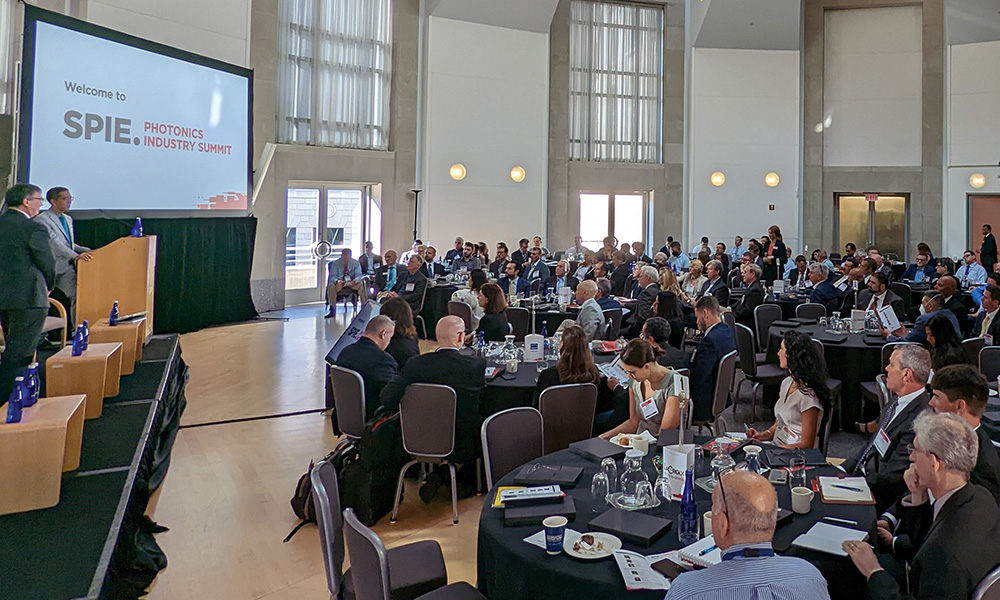
This one-day forum focuses on the optics and photonics industry as an essential enabler of emerging technology. The full-day program hosts U.S. government leaders discussing federal policy and funding important to the optics and photonics industry with an audience of more than 150 company representatives. Our collective goal in meeting is to raise the profile of the optics and photonics industry, while learning more about the priorities of the U.S. government in this technology space.