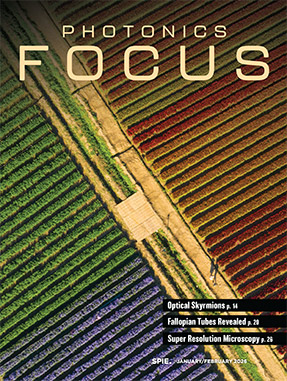
At the back of my farmstead runs a wooded creek—a corridor for riparian plant species and myriad wildlife including deer, coyote, and birds of prey. Abutting the creek is open pasture, primarily populated by grass species and rodents. But between these two distinct ecosystems runs a 30-foot strip of land that is planted with native shrubs. In this light-dappled corridor, where species from both forest and pasture ecosystems overlap, exists a ribbon of incredible diversity and vitality.
This phenomenon, known in ecology as an edge effect can be witnessed in ditches, along roads, and in the brackish zones where freshwater meets saltwater. Anywhere two different systems meet, they combine to create a third unique system that is richer than the sum of its parts.
The vitality resulting from the edge effect is so well understood that farmers who practice self-sustaining agriculture—a practice known as permaculture—deliberately maximize points of contact between different environments by adding curves, hillocks, and berms to create zones of intensified nutrients and biological richness. They maximize the edges.
Science, too, recognizes the potential value of the margins. In recent decades, researchers have recognized that the boundaries between disciplines are, in fact, a fertile frontier. We see this in the emergence of fields like photo-acoustics (optics + acoustics), quantum optics (optics + quantum mechanics), and metamaterials (optics + materials science), born entirely at the boundary of two different disciplines that have merged to give us a capability that neither discipline could achieve alone.
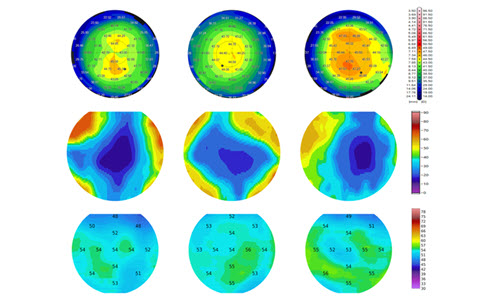
This issue of Photonics Focus explores those boundaries. One feature story tackles optical skyrmions—topological quasi-particles of light being touted as the next big thing in optical communications, information processing and storage, and high-precision positioning. A story on super resolution microscopy explains how engineers overcame the barrier of the diffraction limit by making tradeoffs in speed, resolution, and in vivo capabilities—and how those limitations may yet be overcome. Finally, a third feature story reveals how little was known about fallopian tubes until recently—an artifact of the historic boundary surrounding scientific interest in women’s health.
While this issue celebrates science at the boundaries, I don’t want to suggest that all boundaries should be permeable. Some boundaries—like those we build to protect time with our families, guard our mental health, and say no to practices that violate our ethics—should be fortified and are vital for our long-term sustainability as individuals. At the beginning of this new year, let’s all consider the edges of our professional lives. Which boundaries do you want to fortify, and which ones must yield to unlock the next rich and vital phase of innovation?

Gwen Weerts, Editor-in-chief