

Plenary Event
Optical Engineering Plenary
25 August 2026 • 3:30 PM - 5:40 PM PDT | Conv. Ctr. Room 6A
Session Chairs: Alexander M. J. van Eijk, TNO Defence, Security and Safety (Netherlands) and Jeremy P. Bos, Michigan Technological Univ. (United States)
3:30 PM - 3:40 PM:
Welcome and Opening Remarks
3:40 PM - 4:20 PM:
Freeform optics: progress, promise, and the path forward
Freeform optics has redefined optical system design by enabling simultaneous control of light and system geometry, breaking long-standing symmetry constraints. Historically constrained by limitations in design, fabrication, and metrology, freeform optics has matured into a powerful approach for achieving both enhanced optical performance and more compact system architectures. By jointly shaping aberrations and system geometry, freeform surfaces enable the development of practical new solutions.
In this talk, I will highlight key advances driving this progress and demonstrate how freeform optics translates design freedom into system-level impact in imaging applications. Key challenges remain across the full pipeline— from design for manufacture to system cost — but overcoming these will enable a new generation of optical systems. A key question is whether data-driven approaches can bridge design and realization by learning to interpret measured performance in the presence of fabrication errors and misalignment.
Jannick Rolland is the Brian J. Thompson Professor of Optical Engineering at the University of Rochester and Director of the NSF I/UCRC Center for Freeform Optics, with appointments in the Center for Visual Science and the Department of Biomedical Engineering. Her research focuses on innovation in optical instrumentation. She is a Fellow of the Optica, SPIE, National Academy of Inventors, and an inductee in the XR Hall of Fame. Her honors include the 2014 David Richardson Medal, 2019 University of Arizona Alumna of the Year Award, 2020 Joseph Fraunhofer Award / Robert M. Burley Prize, and the 2025 Hajim Lifetime Achievement and A.E. Conrady Awards.
4:20 PM - 5:00 PM:
Embracing social media for marketing, outreach, and career advancement
Social media offers an unprecedented opportunity to reach and engage global audiences. With billions of users spending multiple hours per day on these platforms, social media has become an essential tool for marketing, educational outreach, and professional visibility. For photonics companies, academic institutions, and individual practitioners alike, effective social media communication is a strategic advantage.
However, the communication styles that succeed on social media differ significantly from those used in traditional marketing or technical presentations. Where should you start, and how do you communicate complex ideas in a crowded digital landscape? In this plenary talk, Cory Boone, Technical Content Strategist at Zygo, will share practical strategies, real-world examples, and best practices for leveraging social media to amplify impact, advance your career, and strengthen the photonics community.
Cory Boone is the Technical Content Strategist at Zygo, where he leads technical marketing and social media initiatives. Through articles, videos, and digital campaigns, he translates complex optics and metrology concepts into clear, engaging content for technical audiences. Cory is highly active in optics education and outreach, creating short-form educational videos with audiences reaching up to 17 million views and participating in in-person outreach events. He is also the author of the Larry Laser children’s book series published by SPIE. Cory holds a B.S. in Optical Sciences and Engineering from the University of Arizona and an MBA from the University of North Dakota.
5:00 PM - 5:40 PM:
Unraveling the 3D fiber architecture of the brain with label-free optical microscopy
Neuronal networks inspire modern artificial intelligence, yet the structural connectivity of the human brain remains largely unresolved at mesoscopic and microscopic scales. In this talk, we will explore how label-free optical methodologies enable quantitative reconstruction of the three-dimensional fiber architecture without exogenous markers by leveraging polarization-sensitive imaging, light scattering contrast, and digital holography. These approaches open new avenues for mapping one of nature’s most intricate networks with high specificity, structural fidelity, and volumetric depth.
Dennis Scheidt completed his undergraduate and graduate studies in Medical Physics at Heinrich Heine University Düsseldorf, Germany, and obtained his PhD in Physics from the Universidad Nacional Autónoma de México. He is currently a postdoctoral research fellow at the Institute for Neuroscience and Medicine 1 at the Jülich Research Center, Germany. His research focuses on multimodal microscopic brain imaging, with particular emphasis on measuring nerve fiber orientations to help unravel the human connectome.
MENU: Coffee, decaf, and tea will be available outside the presentation room.
SETUP: Theater style seating.
3:30 PM - 3:40 PM:
Welcome and Opening Remarks
3:40 PM - 4:20 PM:
Freeform optics: progress, promise, and the path forward
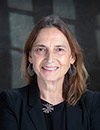 |
Jannick Rolland
Univ. of Rochester (United States) |
Freeform optics has redefined optical system design by enabling simultaneous control of light and system geometry, breaking long-standing symmetry constraints. Historically constrained by limitations in design, fabrication, and metrology, freeform optics has matured into a powerful approach for achieving both enhanced optical performance and more compact system architectures. By jointly shaping aberrations and system geometry, freeform surfaces enable the development of practical new solutions.
In this talk, I will highlight key advances driving this progress and demonstrate how freeform optics translates design freedom into system-level impact in imaging applications. Key challenges remain across the full pipeline— from design for manufacture to system cost — but overcoming these will enable a new generation of optical systems. A key question is whether data-driven approaches can bridge design and realization by learning to interpret measured performance in the presence of fabrication errors and misalignment.
Jannick Rolland is the Brian J. Thompson Professor of Optical Engineering at the University of Rochester and Director of the NSF I/UCRC Center for Freeform Optics, with appointments in the Center for Visual Science and the Department of Biomedical Engineering. Her research focuses on innovation in optical instrumentation. She is a Fellow of the Optica, SPIE, National Academy of Inventors, and an inductee in the XR Hall of Fame. Her honors include the 2014 David Richardson Medal, 2019 University of Arizona Alumna of the Year Award, 2020 Joseph Fraunhofer Award / Robert M. Burley Prize, and the 2025 Hajim Lifetime Achievement and A.E. Conrady Awards.
4:20 PM - 5:00 PM:
Embracing social media for marketing, outreach, and career advancement
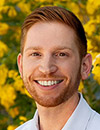 |
Cory Boone
Zygo Corporation (United States) |
Social media offers an unprecedented opportunity to reach and engage global audiences. With billions of users spending multiple hours per day on these platforms, social media has become an essential tool for marketing, educational outreach, and professional visibility. For photonics companies, academic institutions, and individual practitioners alike, effective social media communication is a strategic advantage.
However, the communication styles that succeed on social media differ significantly from those used in traditional marketing or technical presentations. Where should you start, and how do you communicate complex ideas in a crowded digital landscape? In this plenary talk, Cory Boone, Technical Content Strategist at Zygo, will share practical strategies, real-world examples, and best practices for leveraging social media to amplify impact, advance your career, and strengthen the photonics community.
Cory Boone is the Technical Content Strategist at Zygo, where he leads technical marketing and social media initiatives. Through articles, videos, and digital campaigns, he translates complex optics and metrology concepts into clear, engaging content for technical audiences. Cory is highly active in optics education and outreach, creating short-form educational videos with audiences reaching up to 17 million views and participating in in-person outreach events. He is also the author of the Larry Laser children’s book series published by SPIE. Cory holds a B.S. in Optical Sciences and Engineering from the University of Arizona and an MBA from the University of North Dakota.
5:00 PM - 5:40 PM:
Unraveling the 3D fiber architecture of the brain with label-free optical microscopy
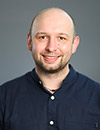 |
Dennis Scheidt
Forschungszentrum Jülich GmbH (Germany) |
Neuronal networks inspire modern artificial intelligence, yet the structural connectivity of the human brain remains largely unresolved at mesoscopic and microscopic scales. In this talk, we will explore how label-free optical methodologies enable quantitative reconstruction of the three-dimensional fiber architecture without exogenous markers by leveraging polarization-sensitive imaging, light scattering contrast, and digital holography. These approaches open new avenues for mapping one of nature’s most intricate networks with high specificity, structural fidelity, and volumetric depth.
Dennis Scheidt completed his undergraduate and graduate studies in Medical Physics at Heinrich Heine University Düsseldorf, Germany, and obtained his PhD in Physics from the Universidad Nacional Autónoma de México. He is currently a postdoctoral research fellow at the Institute for Neuroscience and Medicine 1 at the Jülich Research Center, Germany. His research focuses on multimodal microscopic brain imaging, with particular emphasis on measuring nerve fiber orientations to help unravel the human connectome.
Event Details
FORMAT: General session with live audience Q&A to follow presentations.MENU: Coffee, decaf, and tea will be available outside the presentation room.
SETUP: Theater style seating.