

Plenary Event
Nanoscience + Engineering Plenary
24 August 2026 • 8:30 AM - 9:55 AM PDT | Conv. Ctr. Room 6A
Session Chairs: Kishan Dholakia, Univ. of Adelaide (Australia); Frank Cichos, Univ. Leipzig (Germany)
8:30 AM - 8:35 AM:
Welcome and Opening Remarks
8:35 AM - 9:15 AM:
Organic Electrochemical Meta-Displays
The evolution of display technologies has been driven by the ability to actively control light with ever-increasing spatial resolution and functionality. From liquid crystal panels to micromirror arrays, programmable optical elements have transformed how we generate, manipulate, and interact with visual information. Metasurfaces, ultrathin arrays of subwavelength nanostructures, offer a fundamentally new route to shaping optical wavefronts, enabling compact and highly efficient flat optical systems. However, translating static metasurface functionality into fully programmable and electrically addressable meta-displays remains a central challenge.
In this talk, we will present organic electrochemical metasurfaces as a new platform for intrinsically active meta-optics. By integrating redox-active organic materials with nanoscale photonic structures, we enable dynamic and reversible control of optical responses at the level of individual metasurface pixels. This approach establishes a pathway toward electrically programmable, low-voltage, and high-density meta-displays that operate as self-contained active optical devices rather than hybrid modulation systems. These organic meta-displays support real-time, user-driven holographic functionalities, illustrating how electrochemical material physics can be directly translated into system-level optical programmability. More broadly, this work points toward a future in which organic materials and meta-optics converge to enable compact, energy-efficient, and interactive flat photonic technologies.
Prof. Laura Na Liu received her Ph.D. in Physics from the University of Stuttgart, Germany. She then worked as a postdoctoral fellow at the University of California, Berkeley, and later as a Texas Instruments Visiting Professor at Rice University. Prior to her appointment as a Full Professor at the Kirchhoff Institute for Physics at the University of Heidelberg in 2015, she worked as an independent group leader at the Max Planck Institute for Intelligent Systems. In 2020, she joined the University of Stuttgart, where she became the Director of the 2nd Physics Institute.
9:15 AM - 9:55 AM:
Professor Michael S. Strano is currently the Carbon P. Dubbs Professor in the Chemical Engineering Department at the Massachusetts Institute of Technology. He received is B.S from Polytechnic University in Brooklyn, NY and Ph.D. from the University of Delaware both in Chemical Engineering. He was a post doctoral research fellow at Rice University in the departments of Chemistry and Physics under the guidance of Nobel Laureate Richard E. Smalley. From 2003 to 2007, Michael was an Assistant Professor in the Department of Chemical and Biomolecular Engineering at the University of Illinois at Urbana-Champaign before moving to MIT. His research focuses on biomolecule/nanoparticle interactions and the surface chemistry of low dimensional systems, nano-electronics, nanoparticle separations, and applications of vibrational spectroscopy to nanotechnology. Michael is the recipient of numerous awards for his work, including a 2005 Presidential Early Career Award for Scientists and Engineers, a 2006 Beckman Young Investigator Award, the 2006 Coblentz Award for Molecular Spectroscopy, the Unilever Award from the American Chemical Society in 2007 for excellence in colloidal science, and the 2008 Young Investigator Award from the Materials Research Society and the 2008 Allen P. Colburn Award from the American Institute of Chemical Engineers. From 2014 to 2015 he served as member of the Defense Science Study Group, and is currently an editor for the journals Carbon and Protocols in Chemical Biology. Michael was elected to the National Academy of Engineering in 2017.
MENU: Coffee, decaf, and tea will be available outside the presentation room.
SETUP: Theater style seating.
8:30 AM - 8:35 AM:
Welcome and Opening Remarks
8:35 AM - 9:15 AM:
Organic Electrochemical Meta-Displays
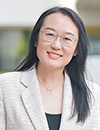 |
Laura Na Liu
Univ. Stuttgart (Germany); Max Planck Institute for Solid State Research (Germany) |
The evolution of display technologies has been driven by the ability to actively control light with ever-increasing spatial resolution and functionality. From liquid crystal panels to micromirror arrays, programmable optical elements have transformed how we generate, manipulate, and interact with visual information. Metasurfaces, ultrathin arrays of subwavelength nanostructures, offer a fundamentally new route to shaping optical wavefronts, enabling compact and highly efficient flat optical systems. However, translating static metasurface functionality into fully programmable and electrically addressable meta-displays remains a central challenge.
In this talk, we will present organic electrochemical metasurfaces as a new platform for intrinsically active meta-optics. By integrating redox-active organic materials with nanoscale photonic structures, we enable dynamic and reversible control of optical responses at the level of individual metasurface pixels. This approach establishes a pathway toward electrically programmable, low-voltage, and high-density meta-displays that operate as self-contained active optical devices rather than hybrid modulation systems. These organic meta-displays support real-time, user-driven holographic functionalities, illustrating how electrochemical material physics can be directly translated into system-level optical programmability. More broadly, this work points toward a future in which organic materials and meta-optics converge to enable compact, energy-efficient, and interactive flat photonic technologies.
Prof. Laura Na Liu received her Ph.D. in Physics from the University of Stuttgart, Germany. She then worked as a postdoctoral fellow at the University of California, Berkeley, and later as a Texas Instruments Visiting Professor at Rice University. Prior to her appointment as a Full Professor at the Kirchhoff Institute for Physics at the University of Heidelberg in 2015, she worked as an independent group leader at the Max Planck Institute for Intelligent Systems. In 2020, she joined the University of Stuttgart, where she became the Director of the 2nd Physics Institute.
9:15 AM - 9:55 AM:
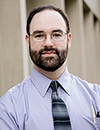 |
Michael S. Strano
Massachusetts Institute of Technology (United States) |
Professor Michael S. Strano is currently the Carbon P. Dubbs Professor in the Chemical Engineering Department at the Massachusetts Institute of Technology. He received is B.S from Polytechnic University in Brooklyn, NY and Ph.D. from the University of Delaware both in Chemical Engineering. He was a post doctoral research fellow at Rice University in the departments of Chemistry and Physics under the guidance of Nobel Laureate Richard E. Smalley. From 2003 to 2007, Michael was an Assistant Professor in the Department of Chemical and Biomolecular Engineering at the University of Illinois at Urbana-Champaign before moving to MIT. His research focuses on biomolecule/nanoparticle interactions and the surface chemistry of low dimensional systems, nano-electronics, nanoparticle separations, and applications of vibrational spectroscopy to nanotechnology. Michael is the recipient of numerous awards for his work, including a 2005 Presidential Early Career Award for Scientists and Engineers, a 2006 Beckman Young Investigator Award, the 2006 Coblentz Award for Molecular Spectroscopy, the Unilever Award from the American Chemical Society in 2007 for excellence in colloidal science, and the 2008 Young Investigator Award from the Materials Research Society and the 2008 Allen P. Colburn Award from the American Institute of Chemical Engineers. From 2014 to 2015 he served as member of the Defense Science Study Group, and is currently an editor for the journals Carbon and Protocols in Chemical Biology. Michael was elected to the National Academy of Engineering in 2017.
Event Details
FORMAT: General session with live audience Q&A to follow presentations.MENU: Coffee, decaf, and tea will be available outside the presentation room.
SETUP: Theater style seating.