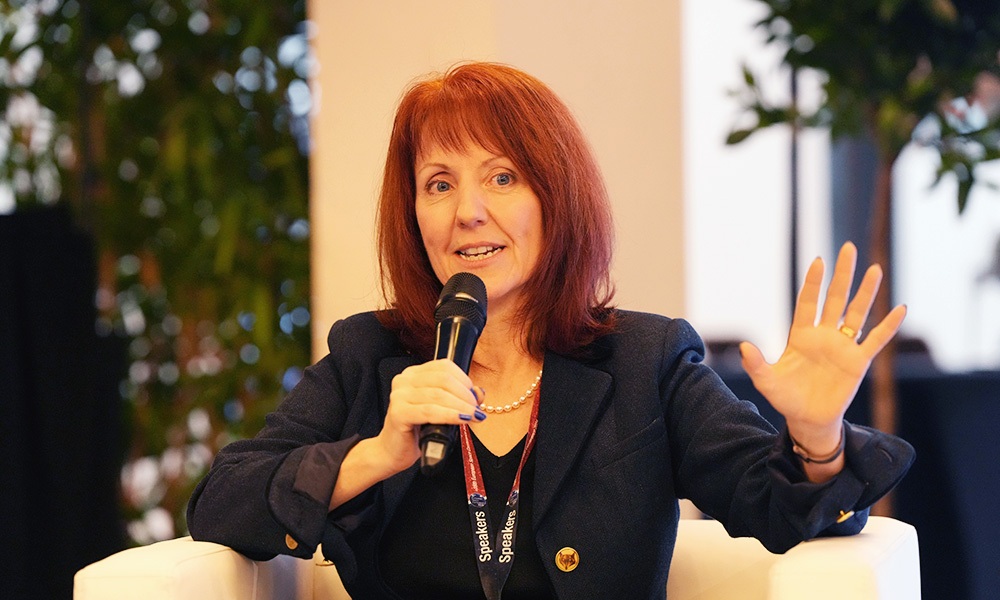
“Children are naturally curious about the world and ask the best questions. It is our duty to engage with those questions and to create pipelines, cultures, and systems that enable young people to follow their career ambitions in STEM.” — Prof. Carole Mundell
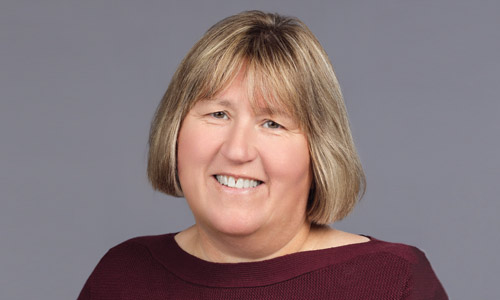
Carole Mundell is an award-winning astrophysicist, innovator, and science diplomat. She served as the UK government’s first Chief International Science Envoy and was the first woman President of the UK Science Council. She holds Honorary Fellowships of the Institute of Physics and the British Science Association, won the 2023 Fred Hoyle Medal and Prize and was named FDM Everywoman in Technology Woman of the Year 2016.
Prof. Mundell will be discussing, “Driving Cosmic Discovery Science at the Frontiers of Engineering and Technology Innovation,” at her plenary talk on 8 July at Astronomical Telescopes + Instrumentation in Copenhagen, Denmark.
The European Space Agency (ESA) Space Science program aims to answer fundamental questions about the nature of the Universe and our place in it. If it won’t spoil anything that you will be discussing at your plenary, tell me what you believe is the nature of the Universe and our place in it?
This is the million dollar question we are all working to answer! The Universe is nearly 14 billion years old, and we are sentient beings for a tiny fraction of that time. I find it remarkable that, as a species, we have been able to conceptualize the universe, discover the mathematics that describe it, devise the experiments to test the physical hypotheses, and design — and fly — the advanced technologies into space to gather cosmic signals in which the physics of the universe are encoded. What I do know is that we have not yet found a habitable planet and none close enough for us to travel to, so I think we should do all we can to protect this planet.
It sounds like you find it energizing to bring people from varying backgrounds and expertise together to solve challenges. What makes a collaborative workplace successful?
Very simply, diverse teams make better decisions. A clear sense of purpose and empowering people to deliver to that purpose is important. Value different styles and expertise whilst recognizing constraints. Underpinning all of this is communication, respect, and curiosity. I’ve seen these qualities combine to create a continuous learning culture, where everyone owns the responsibility and credit for outcomes and can deliver with conviction and courage. The whole becomes greater than the sum of the parts and our ESA Space science missions epitomize this. Most importantly, I believe leaders must live these values to be authentic, not just impose them on their teams and speak grand words! That takes humility and self-reflection.
You’ve been the first woman to hold a few different roles that had historically only been held by men. These include the President of the Science Council and the Chief Scientific Adviser at the Foreign and Commonwealth Office in the UK. As you come into a new role, how do you establish trust and leadership?
I am always curious and learning. I begin by understanding the organization, its structures and systems, and engaging with my people to understand their world. My experience brings credibility and opening conversations about ways of working early on is important. I like to quickly establish the big-picture purpose of our work and then compare that with the real-world work to see if they are aligned. Being excited about the core deliverables of the organization is vital, [it’s] a critical difference between leadership and management.
You have the honor of being recognized for the FDM Everywoman in Technology Woman of the Year in 2016. Share some of the ways that you champion and support other women in STEM.
As I’ve progressed through my career, I have become increasingly aware that inequality is systemic and structural, sometimes deliberate, sometimes casually ignorant. Challenging the status quo, whether on small scales — such as in the moment when a situation seems inappropriate — to larger, more challenging situations has been a core of my experience. It has been important to be a visible role model, even when that has been the most difficult to sustain personally. Moving our organizations beyond the archetypal masculinized and toxic behaviors that disproportionally disadvantage women and minorities benefits everyone. I’ve learned from some incredible male managers how to uplift talented, exceptionally courageous, yet hidden, women in ways that last and build better chances for new generations.
How can your generation of STEM professionals inspire future generations?
I hope we do that every day through groundbreaking discoveries and the novel technologies we invented to open new frontiers. Children are naturally curious about the world and ask the best questions. It is our duty to engage with those questions and to create pipelines, cultures, and systems that enable young people to follow their career ambitions in STEM. Showing them and their families that career paths exist and are inspiring, fulfilling, and accessible is the key.
What advice would you share with someone who is presenting at an SPIE event for the first time?
You are presenting to an expert, engaged and inspiring audience. Be clear, be accessible in your explanations and enjoy the experience.
In what ways have you found SPIE to be valuable to your own professional experience, learning, or network?
SPIE is a key forum for many of my staff to share new ideas and receive expert feedback on their work. For me, I particularly enjoyed the [Henri] Poincaré series during pandemic lockdown. This series of lectures brought together a niche, but diverse and highly dispersed community of experts on polarization from across the globe into a digital haven where we could learn from one another. The design of the series was also very inclusive and thoughtful, sequencing across morning, afternoon, and evening to ensure all time zones had a chance to join some of the lectures at a civilized time. These were a real high point during difficult times.
Lastly, why should people come early to get a front row seat to your Wednesday morning plenary at Astronomical Telescopes + Instrumentation?
I’m thrilled to be speaking to this special audience. I hope to give a flavor of the big unanswered questions humanity seeks to answer and the incredible technologies we are developing for our ESA space science missions to address them. The coming years will herald a revolution in our ground- and space-based capabilities to sense the Universe and, in turn, new technologies allow scientists to dream of new approaches. I hope we might even spark some new ideas together.