On May 29, 2026, the White House Office of Management and Budget (OMB) released a sweeping proposed rule that would fundamentally reshape how federal research funding is awarded, managed, and enforced across all agencies. Published in the Federal Register as “Regulation for Federal Financial Assistance,” the proposal revises the government-wide framework governing grants, cooperative agreements, and other financial assistance programs. Public comments on the proposed rule are open through 13 July.
While the administration describes the proposal as an effort to improve “transparency, accountability, and oversight” in federal spending, SPIE believes it represents a profound shift away from merit-based and expert-reviewed research funding. SPIE has joined with other science organizations and coalitions to express deep concerns regarding this rule change, as it would give the administration unprecedented control over federal grantmaking and centralize decision-making authority within the Executive Branch.
A Fundamental Shift in How Research Is Funded
At the core of the proposal is a restructuring of the long-standing “Uniform Guidance” rules into a binding, government-wide “Uniform Grants Regulation” that would apply across all federal agencies. This would consolidate funding policies across agencies, from the National Science Foundation to the Department of Defense, into a single regulatory framework.
Critically, the rule more permanently and formally institutes new layers of political oversight. Senior political appointees would be required to review and approve all discretionary funding decisions, ensuring that awards align with administration priorities. At the same time, peer review would be relegated to an advisory role rather than serving as the decisive factor in funding outcomes.
The proposal would also expand federal authority to terminate grants, allowing agencies to cancel funding at any time if a project is deemed inconsistent with policy priorities or the “national interest.” Additional provisions could restrict certain research topics, international collaborations, and allowable uses of funds, further embedding policy considerations into funding eligibility and oversight.
Why This Matters for Optics and Photonics
For the SPIE community, the proposed rule introduces significant uncertainty.
The diminished role of peer review threatens the integrity of the funding process. Photonics research often involves highly specialized technical evaluation, and replacing expert-led assessment with politically driven decision-making risks prioritizing ideology over scientific merit.
Expanded grant termination authority undermines the stability required for long-term research. Multi-year projects, such as those solving the toughest of healthcare problems, advancing quantum technologies, or increasing semiconductor manufacturing, could be disrupted midstream, discouraging innovation and destabilizing research teams and progress.
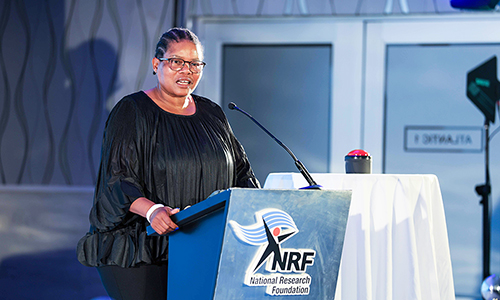
Restrictions on collaborations teamed with policy-driven funding criteria will hinder the global partnerships that are central to photonics advancement. As Colette Delawalla, Founder and CEO of Stand Up for Science warns, the rule could determine “what science is done, by whom, for whom, [and] with whom,” with the potential to isolate U.S. researchers from the international community.
A Critical Moment for Engagement
The proposed rule is not yet final, and though the administration may be intent on finalizing, that doesn’t mean engagement isn’t worth the effort. OMB has opened a public comment period through 13 July, providing researchers, institutions, and professional societies an opportunity to express opposition and lay the necessary groundwork for repealing the rule, whether through the courts or Congress. Thousands of comments have already been submitted, reflecting widespread concern across the research community. Though we are encouraging members to respond directly to the proposed rule in the Federal Register as well, congressional push back may also be needed, and therefore SPIE has cued up its advocacy tool to make it easy for you to contact your elected representatives and voice your concerns about the proposed rule.
SPIE is joining other scientific organizations and coalitions actively mobilizing responses, hosting briefings, and urging researchers to contact their congressional representatives. Advocacy groups emphasize that engagement during this window is essential to ensuring that policymakers understand the real-world impacts on research and innovation.
Detailed, individual comments can carry significant weight. We encourage you to stick with concise statements explaining how this proposed rule would affect your work. These statements can be more impactful than generalized responses, and refraining from hyperbole will help build a meaningful public record.
For the optics and photonics community, this is a pivotal moment. The United States’ leadership in these fields has long depended on a research ecosystem grounded in merit, collaboration, and scientific independence. Preserving that foundation will require active participation; we urge you to submit a comment and engage policymakers before the 13 July deadline.