The school playground, with its jungle gyms and swing sets, sandboxes, and chalked grids for playing hopscotch, can be a place of lasting childhood memories. The shouts and laughter—even the occasional fist fight—have long signified healthy outdoor activity as children soak in fresh air and sunshine. For generations, time outdoors was also viewed as a beneficial break from stressful academic work; a pause to socialize and to just be a kid.
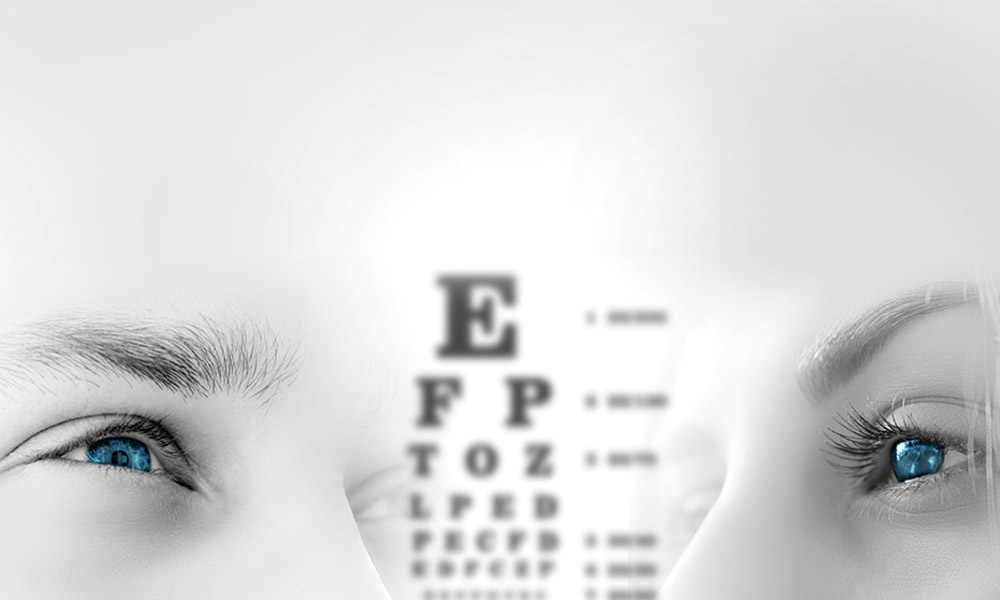
In many cultures, however, that window of outdoor time at school has been narrowing. An emphasis on academic achievement has cut into unstructured time outside, which is unfortunately linked with an alarming increase in childhood myopia, aka, nearsightedness. Projections estimate that by 2050, 50% of the global population will be affected by myopia.
The alarm stems from the fact that myopia is a setup for much worse eye-health problems and vision loss later in life. It is a looming global public health problem with direct costs for health care and indirect costs in terms of lost productivity in adulthood. The younger a child develops nearsightedness, the further it evolves and the stronger it becomes.
The clock is ticking to understand how to prevent and treat myopia, starting with efforts to unlock the benefits for children of playtime outdoors, particularly exposure to full spectrum sunlight. The data show—and for reasons that are not entirely clear—that exposure to two hours or more of daylight each day may make a critical difference in delaying the onset of nearsightedness in elementary-school-age children.
Understanding the precise role of factors associated with myopia onset and progression requires accurate quantification. Over the past decade, a surge in wearable sensor technology has led to the development of devices that can track physical activity, time outdoors, and viewing distance. The devices provide objective, continuous, real-time data on near work and ambient illumination, yielding more precise and reliable data that contributes to a better understanding of the relationship between the visual environment and myopia.
“Recent studies examining the visual environment as it relates to myopia have utilized a range of wearable sensors, including dosimeters, actigraphs, and range-finders to record radiation, light exposure, spectral content, working distance, activity, and sleep/wake patterns,” according to a review article by Raman Prasad Sah and colleagues at the University of Houston College of Optometry. Most widely used in myopia research, they write, has been the Actiwatch, a wrist-worn sensor used to quantify ambient illumination, physical activity, and sleep.
But University of California, Berkeley and San Francisco professor of optometry Elise Harb says there are more comprehensive wearables, like the visual environment evaluation tool, or VEET, from Meta Reality Labs.
“It’s a spectacle device,” Harb says, “although, you know, wearing devices and kids is tricky—you’ve got to get them to wear it. But it is powerful in that it has a spectral sensor, an ambient light sensor, and it also has time of flight sensors, so it can map out the depth of [of the wearer’s] visual environment in a pretty wide field of view.”

The visual environment evaluation tool, or VEET. Photo credit: Meta Reality Labs.
The VEET provides accurate quantification of real-time distances across different target types and sizes and is capable of effectively distinguishing indoor and outdoor illumination levels, write Sah and colleagues. They say it will be valuable in studies evaluating risk factors for myopia to gain a better understanding of the role of near work and light exposure.
Meta describes VEET as “a research instrument that integrates the highest quality of spectral, illuminance, movement, and distance sensors into an all-day-wearable form factor that can be connected to compatible glasses frames.” The device has applications in perceptual science research, says Meta, including how the modern visual diet influences the onset and progression of myopia. Study participants wear the device during the day, charge it at night, and return the device to researchers when a study is complete.
Myopia is one of the refractive errors that can occur in the eye where the optical power is mismatched to the length of the eye, Harb explains. Myopia occurs when the axial length of the eye has grown too long for its optical power, so that light comes into focus in front of the retina, being blurred.
It’s around the time of kindergarten, Harb says, that children four-to six-years-old who are predisposed to developing myopia get glasses to help them see better far away. “And unfortunately, it tends to be progressive. There’s no magic age where it stops. We think slowing of progression usually starts in the teens, although there are several lines of evidence that suggest it continues to progress sometimes when folks change environments, like going to college.”
According to the International Myopia Institute (IMI), worldwide one-fifth of blindness is due to refractive error, predominantly myopia. Says IMI, “Myopia (defined as a spherical equivalent refraction ≤ −0.50 diopter [D]) is an inadequately acknowledged global public health problem and chronic condition that affects almost 30% of the world’s population. Myopia impacts an individual’s early life, imposes disability by way of poor vision, and is lifelong.”
The prevalence of myopia has, in the last two decades, increased considerably—“an increase at a faster rate than we know genetics can be modified,” says Harb. “And so, we know that there is a genetic like predisposition. If you have two parents who are nearsighted, you’re more than 50% more likely to be nearsighted. But the question is, shared environment. Those parents are also giving environmental features to their kids, and we know that the visual environment is powerful in regulating eye growth.”
“When the eye grows very long, and even when it’s not ridiculously long,” Harb says, “you’re at risk for things like retinal detachments, glaucoma, cataracts. There’s a disease burden, there’s an economic burden, and a societal burden overall.” But what to do?
“A popular narrative is that [the myopia crisis] is all due to cell phones,” says optometry researcher Mark A. Bullimore, a consultant and adjunct professor at the University of Houston. But the epidemiology data show that the crisis has been building before the advent of smartphones and, in some cases, even before widespread adoption of personal computers.
“You can’t completely blame the technology,” Bullimore says, “but anything that sort of discourages or prevents a child from spending more time outdoors is probably the problem. So, if a kid is less inclined to go out and play with their friends, or whether they’ve got more homework, or whether they’re distracted by their iPad—those are all things that ultimately can be associated with, while not necessarily being, the root cause.”
To control myopia post onset, there are a variety of options for doctors and their patients (and their patients’ parents) to consider. Among the most recent are spectacle lenses from Essilor, branded Stellest, that are among the first optical devices approved by the US Food and Drug Administration (FDA) to treat progression of childhood myopia.
According to FDA, Stellest lenses have a clear 9 mm diameter area in the center that is surrounded by rings of tiny, raised dots, or peripheral lenslets, that induce peripheral light defocus that may help slow the progression of myopia in children.
The FDA says it evaluated two years of data from a clinical study demonstrating that the Essilor lenses slowed myopia progression as compared to single-vision control lenses. The study measured the change in glasses prescription and the change in the axial length of the eye. The study showed a 71% reduction in myopia progression at 24 months, and a 53% reduction in eye elongation at 24 months.

The Essilor Stellest lens. Photo credit: Essilor - lens.
Interventions like the Stellest spectacles and MiSight contact lenses (and others) are primarily based on the theories of competing defocus (the blurring of an image caused by light not focusing perfectly on the retina), such that the peripheral defocus shifts the eye’s image in front of the retina—creating a stop signal for eye growth. While other spectacle devices modulate contrast sensitivity between an object and its background, write Dewen Cheng and colleagues in a recent paper in Advanced Photonics Nexus.
The contrast sensitivity theory employed by spectacle lenses like those from SightGlass Vision proposes that unnatural high-contrast images place additional strain on retinal cone cells, leading to an increase in axial length. Moderately reducing contrast, then, can effectively slow the growth of axial length.
What’s missing with these products, Cheng and colleagues write, “is a lack of systematic optical analyses.” They modeled Stellest and other lenses as optical surface sequences and employed sequential ray tracing to predict their optical performance, aiming to reveal the common characteristics among these products.
Their aim was “to develop a method for rapidly constructing and accurately analyzing myopia control lenses, allowing for a unified standard to evaluate these lenses.”
For myopia control, the authors write, there exists an optimal range for contrast reduction. Simulations during the lens design process can accurately predict contrast reduction at various spatial resolutions before manufacturing, ensuring it falls within an acceptable range. For the defocus strategy, their model allows determination of the overall defocus amount based on simulated pupil wavefront data to assess the validity of the design.
Overall, the advantages of their evaluation tool, the authors write, include the ability to flexibly adjust surface configurations to simulate most types of lenses currently on the market, and the use of ray tracing allows for modeling that is less time consuming and highly accurate.
Other optical device interventions to slow the progression of childhood myopia include multifocal contact lenses and gas permeable lenses worn overnight to reshape the cornea. Pharmacological measures include atropine eye drops that slow the progression of myopia in children by reducing excessive axial elongation of the eye.
The future holds promise for new, minimally invasive treatments like a product with the brand name Nanodrops being pioneered by Zeev Zalevsky and colleagues. Zalevsky, a professor of engineering and the vice president for academia-industry relations at Bar-Ilan University, describes NanoDrops as an adjustable and reversible treatment for refractive errors like myopia and presbyopia that use nanoparticles suspended in eyedrops. Treatment begins by marking the surface of the eye’s lens with a laser. The laser does not remove tissue, as in LASIK, rather it reversibly marks a channel to hold the nanoparticles.
“Then we put in the eye drops with the nanoparticle,” Zalevsky says. “The nanoparticles stick to the locations that were marked.” Once in place, the nanoparticles absorb and scatter light such that the optical functionality of the light that passes the eye lens is redirected, thus correcting the refractive error. Myopia is treated by changing the focal length of the lens of the eye. Presbyopia is treated by increasing the depth of focus of the lens in what could also be highly beneficial for childhood myopia.
A huge barrier for myopia control treatments is oftentimes high cost. Harb points out that “the control treatments that are available are not even deemed medically necessary, so they’re all self-pay. Medical insurances will not pay, nor will vision insurances pay for any of these treatments.”
Benjamin Franklin, the inventor of bifocal lenses, insisted that an ounce of prevention was worth a pound of cure, Bullimore notes. Public health campaigns to get kids outside more in places like Taiwan are starting to bear fruit, he says. “There’s a strong relationship between early onset and more myopia once it develops. Its average rate of progression is age dependent, but you’re at more risk of higher levels of myopia if you develop myopia at age six than develop it at 16.”
But ongoing research with wearable sensor devices like VEET will provide the kind and amount of data needed to unlock the precise triggers for the onset of childhood myopia. And with Stellest and other FDA-approved childhood myopia control lenses, additional lens makers are queueing up their myopia control products for regulatory approval. In other words, with the tools of modern optics, solutions to the myopia crisis are starting to come into focus.
William G. Schulz is Managing Editor of Photonics Focus.