The news coming out of the semiconductor and photonics industries over the past few years has been like a high-stakes sequence from a techno-thriller. Between the CHIPS and Science Act and the sprawling new fabs rising across the American landscape, the physical infrastructure of our digital—and increasingly optical—future is taking shape at a staggering pace.
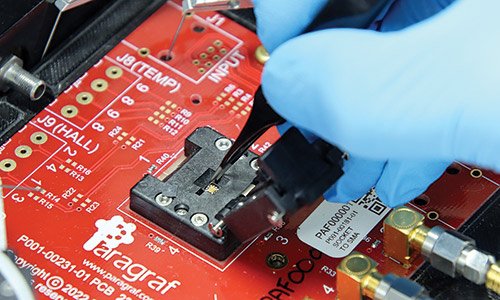
What often gets overlooked, however, is that none of these fabs function without photonics: lasers for metrology, lasers and optics for lithography, and precision sensing are woven into every production line. In other words, the CHIPS revolution is also a photonics revolution. Behind every chip is a photonics workforce—technicians and engineers—whose skills make semiconductor production possible. As the CHIPS and Science Act accelerates demand, the photonics talent pipeline is straining under the pressure. The race to rebuild domestic manufacturing is, by necessity, a race to expand the photonics talent pool.
But there is a ghost in the machine. As the hardware capacity grows, we are hitting a wall that no amount of capital can scale: the talent gap. We aren’t just short of workers; we are short of awareness. As the EDGE Consortium and the innovators at Epixego—a US-based AI-driven workforce development and talent discovery company—have found through their recent Fall 2025 and Winter/Spring 2026 cohorts, the problem isn’t the pipeline. It’s the search bar.
The Misleading Problem of Prior Awareness
Most search and discovery today are built on explicit query models. This system assumes the user has an initial informational intent, such as a keyword like “bioinformatics” or “process engineer.”
However, prior awareness is a form of social privilege. For EDGE Scholars—representing 14 four-year institutions and a kaleidoscope of academic majors—the semiconductor industry is often a black box. A student majoring in philosophy or biology may have the exact cognitive architecture needed for semiconductor ethics or wet-bench processing, but they will never type “lithography” into a search bar. This creates the awareness bottleneck. In social cognitive career theory, we call this a deficit in vicarious learning. Without role models or social capital, a student’s discovery horizon is limited to what they already know.
The Competency Genome: Decoding the “How,” Not Just the “What”
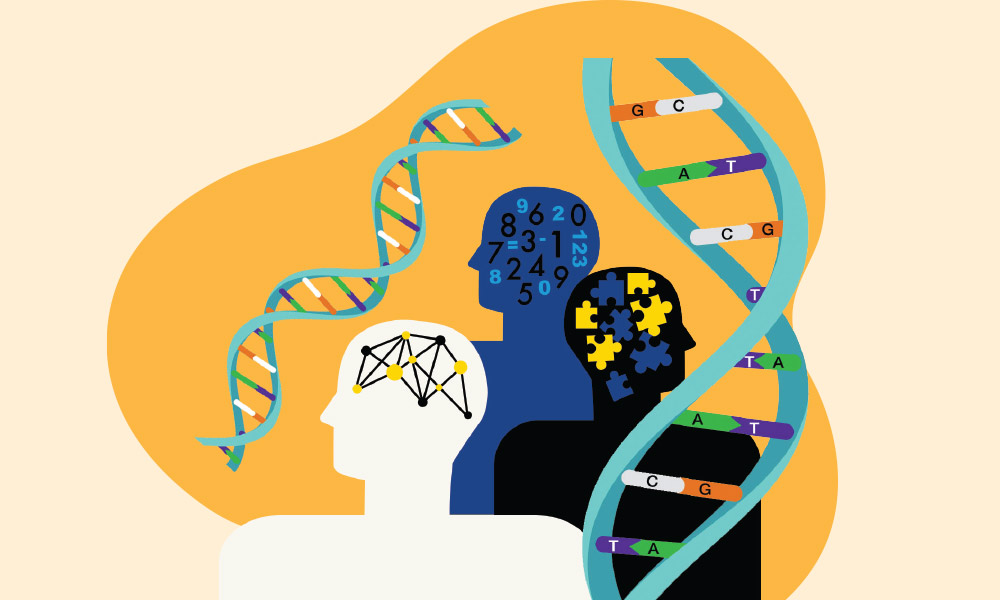
To solve this, we must transition from a skills mindset to a competency genome approach. While these terms are often used interchangeably, the distinction is vital for the US talent strategy.
Skills (the what): These are specific, learned abilities for performing tasks (for example, Python programming, soldering, or operating a CNC machine). Skills are often context-bound; if the tool changes, the skill may become obsolete.
Competencies (the how): These are the underlying behavioral traits, cognitive patterns, and social-emotional attributes that lead to success (for example, systemic/critical thinking/synthesis, analytical thinking/inquiry, or adaptive collaboration).
A competency is transferable—the “genomic marker” that lets a student move from one industry to another. For example, a student who loves solving complex puzzles—whether in a game or a lab—uses the same underlying competency we call systemic inquiry. It’s the same capability a technician needs to diagnose a vacuum failure in a lithography tool. By mapping a student’s competency genome, we help a student reveal their potential before they know the technical vocabulary for it.
From Searching to Self-Discovery
In our work with the EDGE Fall 2025 cohort, we saw this transformation in real-time. Instead of asking the 391 invited scholars what job they wanted, we used a patented, National Science Foundation-supported hierarchical ontology to help them identify their native competencies.
This produced an unexpected breakthrough. The system acted less like a search tool and more like a mirror, showing students patterns in how they think. For example, one student who enjoyed deconstructing game mechanics discovered that the same cognitive fingerprint aligns with systems engineering.
Scaling Mentorship with Competencies
The data from our 2025/2026 cohorts show how powerful this approach can be. We saw about a 70% participation rate in mentorship—a staggering number for voluntary, cross-institutional programs. By using the competency genome, we were able to provide silent mentorship at scale. For example, when a student at a liberal arts college sees a near-peer at a major engineering university who shares their same behavioral fingerprint, their self-efficacy skyrockets. They stop seeing a job posting and start seeing an occupational identity. They realize that being a scientist isn’t an inaccessible title; it’s a way of thinking that they already possess.
One student put it this way: “I discovered that technical and creative competencies like programming and music are not mutually exclusive… Seeing that connection helped me realize that my skills could also fit into innovation-focused environments.”
The Path Forward: Repurposing America’s Talent
Across photonics, the talent challenge is ultimately a design problem. We don’t have time to build new pipelines from scratch. We must repurpose the talent we already have—across all 14 institutions and every major—by showing how their existing competencies align with the nation’s most critical needs.
When we move from systems that require students to know the right keywords to ones that help them discover their strengths, we expand opportunity rather than letting past experience limit future choices.
The future of the US workforce isn’t just about silicon and steel; it’s about creating structures that give students agency. It’s about building a system that doesn’t just ask us what we know but shows us who we can become.
Anita Balaraman is founder and CEO of Epixego Inc.
Lesley Nesbitt is program director of the EDGE Consortium/Dartmouth College.