One of the things I love most about optics is how small the world can feel. Go to a conference like Photonics West, and you start to see it immediately: Former students now leading project teams, mentors introducing protégés in conference rooms, generations overlapping in the exhibit halls. It’s a reminder that our field moves forward not just through discoveries, but through people.
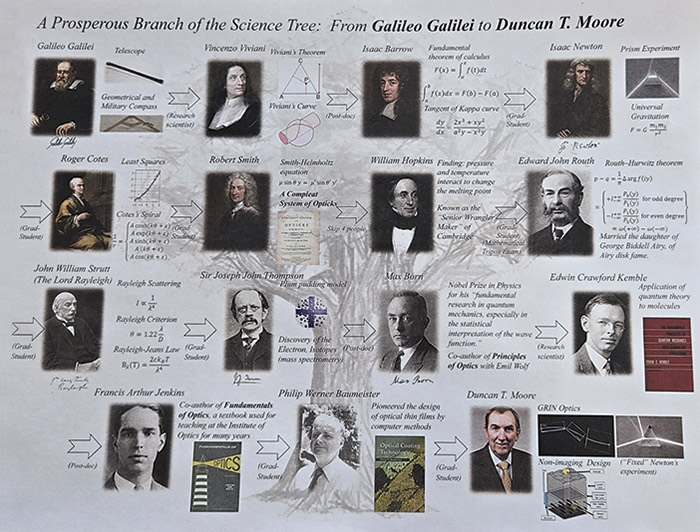
In academia, we sometimes talk about this as an academic family tree. My own lineage in lens design goes back to Rudolf Kingslake, through my thesis advisor, Duncan Moore (who has traced his own scientific lineage back to Galileo). This year, while I’m serving as SPIE President, one of my former students, David Lippman, will be teaching some of my lens design classes while two of the students he mentored will be advisors on student final projects. Five generations of lens design knowledge, passed down not in a straight line, but through conversations, examples, and shared problem solving. Roles cycle. Responsibility cycles. Knowledge keeps moving.
A powerful reminder of this continuity came from an unexpected place: Kingslake’s old card catalogs. One catalog held exam problems—handwritten reminders of how optics was taught before computer optimization. Another catalog held something even more meaningful—cards for every student Kingslake ever taught, complete with notes. Reading through them, it became clear that his legacy wasn’t just the optics problems he posed, but the people he invested in.
That lesson resonates deeply with me. I’ve always liked to figure out what’s keeping somebody from doing something, especially when it comes to students finding their confidence and their place in the field. And I’ve seen firsthand how mentorship, encouragement, and recognition compound over time. One generation enables the next. Then that generation pays it forward. Mentorship isn’t a side activity in our field—it’s core to how optics advances.
Cycles like these are easy to overlook because they happen gradually. But they’re worth pausing to acknowledge—especially when we take time to recognize the people who shape others’ paths. SPIE awards and honors exist for exactly this reason: to highlight those whose influence extends beyond their own work and into the success of others.
As we move through this awards season, I encourage you to think about your own academic family tree. Who helped you cross a threshold? Whose mentorship changed the trajectory of your career? Taking the time to nominate a colleague or mentor is one way we ensure these cycles continue—for the next generation, and the one after that.

Julie Bentley
2026 SPIE President