When I was in high school, I didn’t dream of becoming an optical engineer. I attended a small school with just one science teacher with a knack for chemistry. I went to college fully planning on studying chemical engineering, but due to the cooling job market for chemical engineers, I switched majors to optics. It wasn’t a move I made out of passion—more out of pragmatism. However, I hadn’t given up my interest in chemistry. Sophomore year, I started working in Duncan Moore’s gradient index (GRIN) research lab at the University of Rochester (UR). I studied glass chemistry and learned how to melt glass and run ion exchange experiments. By my senior year, I was working three part-time jobs and struggling to pay for college, so Duncan encouraged me to apply for an SPIE scholarship.
I won the D.J. Lovell Scholarship, and it changed my career path. While the scholarship helped me register for classes, it also brought me to my first SPIE conference in San Diego to receive the award. At that conference, I met Warren Smith, Bob Fischer, and many others from the optical design community. At the time, I had no idea I was hanging out with giants in the field, but I knew I wanted to explore optical design further based on how much they loved what they did. Looking back, I realize how fortunate I was to end up in optics. My daughter is a chemical engineer, and after trying to help her with her homework (once) I suspect that I would have likely hated being a chemical engineer. It’s funny how things work out when you’re willing to cross into unfamiliar territory.
Today, as I work with students at UR, I see them facing different boundaries. The socialization skills that previous generations took for granted simply aren’t there for many of them. Building professional networks can trigger real anxiety. Several years ago, I noticed that when I brought students to conferences, they would just stand there. They wouldn’t approach anyone. So, I created an incentive for the class: Collect five business cards from people you don’t know, and you get bonus points. It sounds simple, but it works. It gives students a concrete reason to push through that initial discomfort, and they build their network while building their confidence.
I’ve always been drawn to connecting things that aren’t connected. That’s what SPIE did for me as a struggling undergraduate, and it’s what I try to do for students now. As we gather at Photonics West in January, I want to challenge all of us—especially those early in their careers—to push through at least one boundary. Talk to someone you don’t know. Introduce yourself to a speaker whose work interests you. Exchange business cards with someone from a different part of the field.
Where better to make these connections than at Photonics West, where everyone in our field is in the same place at the same time? I wouldn’t be where I am today without SPIE and the people I met along the way. Let’s make sure the next generation has the same opportunities to connect, grow, and discover where their paths might lead.

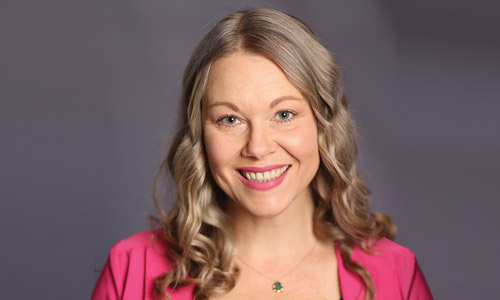
Julie Bentley
2026 SPIE President