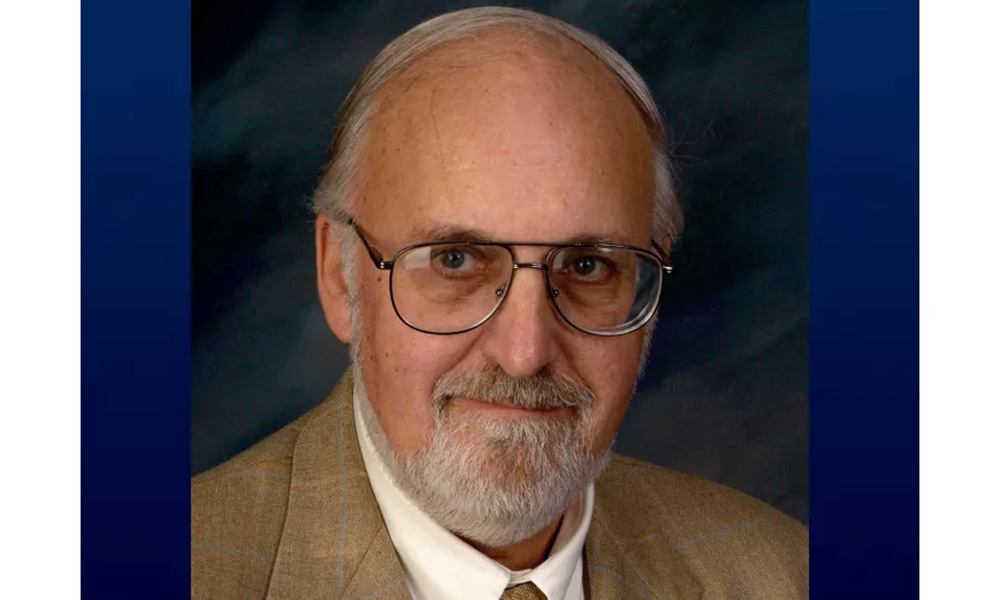
SPIE Fellow Harrison H. Barrett passed away 22 November at the age of 86. He was a professor emeritus of medical imaging, optical sciences, biomedical engineering, and mathematics at the Wyant College of Optical Sciences at the University of Arizona (UA).
Barrett’s scientific specialty was image science, a field that provides unified theories, design principles, and evaluation methods for all forms of imaging. His research group at the College of Optical Sciences applied the methodologies of image science to astronomy and optical metrology, but his main focus was medical imaging, where he was a longtime leader in developing new methods for the assessment and optimization of image quality.
Barrett made his first gamma-ray image at age 10, when his parents bought him a Gilbert Atomic Energy Lab for Christmas. This high-end chemistry set, which included actual radioisotopes, would help inspire young Harry toward a career in medical imaging.
Barrett received a BS in physics from Virginia Polytechnic Institute in 1960 and an MS in physics from MIT in 1962. After receiving his PhD in applied physics from Harvard University in 1969, Barrett became a project leader in the medical electronics unit of the research division at Raytheon in 1971. There he began his influential research in medical imaging. By 1974, Barrett was an associate professor in the Optical Sciences Center and the Department of Radiology at UA. Two years later, he was promoted to full professor, and in 1990, was granted the title of Regents Professor at the university.
A longtime SPIE Member, Barrett helped found SPIE Medical Imaging when it began in 1972. He received the SPIE Gold Medal in 2011, the society’s highest honor, for his many contributions to the field of medical imaging and image science.
Over his extensive career, Barrett published more than 300 journal papers, gave over 125 invited presentations at scientific conferences, and held 29 patents. Probably his most renowned publication was the book Foundations of Image Science, which he co-wrote with SPIE Fellow (and former student) Kyle Myers. The winner of the first Joseph W. Goodman Book Writing Award in 2006, the book covers the principles, data, and higher mathematics involved in imaging systems, and how to comprehend and evaluate those systems.

Published in 2004, Foundations of Image Science offers a comprehensive treatment of the principles, mathematics, and statistics of image science. Credit: University of Arizona.
"Harry Barrett was a brilliant scientist who was held in the highest regard internationally for his optics and imaging expertise, dedication to teaching, and scientific impact," says Myers. "I would also point out that Harry’s impact on imaging science has a large multiplication factor through the many students he directly mentored as well as those who took his courses at the University of Arizona, scientists who heard his conference presentations and short courses, and the conference presenters and audience members who benefited from his piercing questions and commentary at professional meetings. Truly, the new ground broken by these people and the innovations that resulted are also a product of Harry’s distinguished career. Harry was gifted, funny, adventurous, and deeply dedicated to his family and students. We have lost an incredible member of our field who will be dearly missed."
In 2014, to honor the many ways he had enriched their lives, Barrett’s former students and colleagues set up the “Harrison H. Barrett Graduate Student Scholarship in Optical Sciences and Medical Imaging.” The scholarship is open to first-year PhD students whose research interest is the application of optical technologies in areas of medical imaging.
In 2018, Barrett and his wife Cathy (who passed away in 2022) established the “Harrison H. and Catherine C. Barrett Endowed Chair in Optical Sciences and Cancer Imaging” to support a faculty position in OSC, with a membership in the University of Arizona Cancer Center.
In 2019, SPIE established the SPIE Harrison H. Barrett Award in Medical Imaging. Recipients of this award are recognized for their outstanding accomplishments in medical imaging.

In 2018, the Barretts established the Harrison H. and Catherine C. Barrett Endowed Chair in Optical Sciences and Cancer Imaging. Credit: University of Arizona.
In a 2020 UA Reflections article, Cathy Barrett described her husband as someone who “has just always stayed busy doing things.” Along with his many contributions to advancing the physics, mathematics, and engineering of medical imaging and image science, Barrett was also known for his eclectic mix of outside interests, including adventure travel, trekking, foreign languages, history, horseless carriages and baseball trivia.
A memorial service at UA is currently being planned.