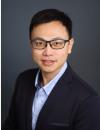
Prof. Yao-Wei Huang
Senior Member |
Associate Professor
at National Yang Ming Chiao Tung Univ
|
|
|
|
|
Contact Details:
|
Sign In to send a private message or view contact details
|
|
Dr. Yao-Wei Huang is an Associate Professor of Photonics and a Yushan Young Fellow at National Yang Ming Chiao Tung University (NYCU). He is also a Fellow of the Higher Education Academy (HEA) and a Senior Member of SPIE, the International Society for Optics and Photonics. Dr. Huang has gained extensive research experience at world-renowned institutions, including Harvard University, Caltech, and the National University of Singapore (NUS). He received his Ph.D. in Applied Physics with the Dean's Award from National Taiwan University, specializing in nanophotonics, materials science, nanofabrication, and nanotechnology. Dr. Huang’s research focuses on advancing nanophotonics, metasurfaces, meta-optics, inverse design, dispersion engineering, nonlocal effects, structured light, and computational visual sensing, with applications in extended reality and depth perception technologies. He has authored and co-authored over 50 peer-reviewed publications and holds more than 25 patents. Through his research, Dr. Huang strives to push the frontiers of metasurface technologies, driving innovations that will shape the future of optical systems and benefit society.
Upcoming Presentations
Most Recent |
Show All
|
Retrieving Data, please wait...
Publications
Most Recent |
Show All
|
Retrieving Data, please wait...
Conference Committee Involvement
Most Recent |
Show All
|
Retrieving Data, please wait...
Course Instructor
Most Recent |
Show All
|
Retrieving Data, please wait...
|


