Prof. Sanjeev Kumar Raghuwanshi
Senior Member |
Indian Institute of Technology (Indian School of Mines) Dhanbad
|
|
|
|
|
Contact Details:
|
Sign In to send a private message or view contact details
|
|
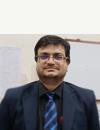
Sanjeev Kumar Raghuwanshi is a professor in the Department of Electronics Engineering at IIT (ISM) Dhanbad and a senior member of IEEE. He completed his bachelor's degree in 1999, a master's in solid-state technology from IIT Kharagpur in 2002, and a Ph.D. in fiber optics from the Indian Institute of Science (IISc) Bangalore in 2009. He later served as a postdoctoral research fellow at City University of London from 2014 to 2015.
A prolific researcher in the field of optical fibers, Dr. Raghuwanshi has authored or coauthored over 100 peer-reviewed SCI journal articles and six books in the last ten years. Additionally, he has filed seven Indian patents within the past five years.
His work has earned him the Erasmus Mundus+ Scholarship for his doctoral studies and the Best Research Award from the Indian Institute of Technology (ISM) Dhanbad. He actively contributes to the scientific community as an associate editor for several esteemed journals, including the IEEE SENSORS JOURNAL, IEEE ACCESS, Springer Nature, and Optica. He also serves as a reviewer for numerous IEEE publications.
Upcoming Presentations
Most Recent |
Show All
|
Retrieving Data, please wait...
Publications
Most Recent |
Show All
|
Retrieving Data, please wait...
Conference Committee Involvement
Most Recent |
Show All
|
Retrieving Data, please wait...
Course Instructor
Most Recent |
Show All
|
Retrieving Data, please wait...
|


