Dr. Alvaro Casas Bedoya
Senior Member |
Associate Director Integrated Photonics Sensing
|
|
|
SPIE Leadership:
|
Retrieving Data, please wait...
|
|
SPIE Membership:
|
17.0 years 
|
|
SPIE Awards:
|
Senior status | 2012 Outreach Grant | 2008 Optics & Photonics Education Scholarship
|
|
SPIE Involvement:
|
Retrieving Data, please wait...
|
|
Websites:
|
Company Website
|
Company Website
|
|
|
|
Contact Details:
|
Sign In to send a private message or view contact details
|
|
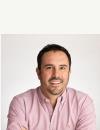
Dr Alvaro Casas Bedoya is the Associate Director of the Integrated Photonics Sensing Group and Senior Manager of the Jericho Smart Sensing Lab at the School of Physics, The University of Sydney. He received a PhD in Physics from the University of Sydney (2013), a double MSc in Photonics with Distinction through the Erasmus Mundus program (Scotland and Belgium), and a BSc (Hons) in Physics from Universidad del Valle, Colombia.
He is part of one of Australia’s most successful photonics groups, formerly the ARC Centre of Excellence CUDOS, which focuses on chip-based, ultra-fast, energy-efficient information processing and smart sensing technologies. Dr Casas Bedoya has made several impactful contributions to on-chip CMOS photonics, particularly in optoelectronics and heterogeneous integration. His recent work [Nat Commun 14, 7544 (2023); CLEO SW3O (2023)] demonstrated a nonlinear glass platform compatible with Si-CMOS nanofabrication for microwave signal processing, with applications in radar, satellite systems, wireless networks, and 6G. His earlier achievements include the demonstration of on-chip optoelectrical integration [APL Photonics 6, 036106 (2021)] and a CMOS-compatible RF filter from silicon nanowires [Optica 4, 847 (2017); Opt. Lett. 40, 4154 (2015)].
He collaborates internationally with organizations such as Microsoft and IMEC and remains an active SPIE volunteer. He advises both the University of Sydney SPIE/OPTICA Student Chapter and the Sydney OPTICA Local Section, which he co-founded. Internationally, he established the first SPIE chapter in Latin America, and the first SPIE chapter and OPTICA section in Australia. These initiatives have significantly expanded global student engagement, with twelve OPTICA chapters now in Colombia and six SPIE chapters in Australia.
Publications
Most Recent |
Show All
|
Retrieving Data, please wait...
Conference Committee Involvement
Most Recent |
Show All
|
Retrieving Data, please wait...
|

